Grade 11

Native Ways of Knowing Mock Trial The People vs. Governor Peter Hardeman Burnett

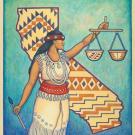
Native Ways of Knowing Mock Trial: The People vs. Governor Peter Hardeman Burnett

This mock trial learning activity will allow students to question and consider California’s first governor, Peter Hardeman Burnett’s policies and treatment of Native Americans. This activity encourages students to analyze history critically and empathize with those impacted by injustice. This mock trial script is designed to engage students in critical thinking about history while fostering empathy and analytical skills. This activity encourages critical thinking, empathy, and a deeper understanding of history. This lesson plan integrates critical thinking, collaboration, and historical analysis, fostering a deeper understanding of California’s early governance and its consequences. This mock trial can be adapted based on the desired educational or dramatic focus, emphasizing historical facts, ethical dilemmas, and the broader implications of Burnett’s policies.

Native Maker STEM Unit

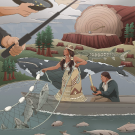
Redwood Bark House

Students will learn about the diversity of housing among California tribes and the traditional and ecological knowledge tribes have and are using in designing these structures. Students will use geometric and ecological lessons to create a model of a redwood bark house. This activity supports learning geometry and environmentalism concerning California tribal structures.

Illustration by Meilan Solly © Smithsonian

Native Americans in Hollywood

Hollywood’s portrayal of Native Americans has long been intertwined with American politics and government policies, influencing national attitudes toward Indigenous peoples of North America. From the silent film era through the height of Cowboy and Indian Westerns, Hollywood shaped a narrow and damaging image of Native people. These films often depicted Native Americans as ignorant, lazy, violent, alcoholics, or savages, reinforcing harmful stereotypes. Such portrayals helped justify and support racist government policies including land dispossession, forced assimilation, cultural erasure, and even genocide. This racist foundation in the media was built on earlier political propaganda that framed Native Americans as obstacles to progress and civilization. Hollywood used humor and familiar storytelling to entertain audiences while dehumanizing Indigenous people and upholding white supremacy. The stereotypes created in these early films perpetuated racist propaganda from colonization, solidifying a negative public opinion and masked the harsh realities of U.S. policies against Native nations. Understanding this history is essential for students to recognize how the media can reinforce racism and shape social attitudes over time. This lesson invites students to critically analyze the power of film as a cultural force and to explore the importance of accurate and respectful representation of Native Americans in the media today. Through examining the origins of racist portrayals and their connections to political propaganda, students will learn to identify the damage caused by such misrepresentations. They will also have the opportunity to research authentic Native stories and consider how these narratives could be shared in ways that promote social justice and cultural respect.

Members of Redbud Resource Group

Original Patriots: Cultural Revitalization & Healing Trauma in Native California (Part 3 of 3)

RH.9-10.2, RH.9-10.4, RH.9-10.6, WHST.9-10.1, WHST.9-10.9

This lesson examines how cultural revitalization serves as a tool for healing intergenerational trauma and reclaiming identity in Native California. Through exploring key concepts like cultural revitalization, Land Back, and environmental stewardship, students analyze real-world examples of resilience and cultural resurgence led by Indigenous communities. Activities include group discussions, the Land Back Spider Graph analysis, and a Webquest featuring case studies of Native leaders. The lesson emphasizes the importance of connecting cultural practices with wellness, combating stereotypes, and fostering a deeper understanding of Indigenous persistence and sovereignty. The teacher must understand that despite our tragic history, Native communities continue to find hope, look to the future, and lead the way in repairing our relationships to local ecosystems. The teacher must be prepared to actively engage in conversations about resistance and resilience throughout this lesson. Essential Questions: How does cultural revitalization help Native communities heal from intergenerational trauma and reclaim their identities? What role do the Land Back movement and environmental stewardship play in restoring Indigenous sovereignty and fostering resilience? Students will engage with: One Turn and Talk discussion. Small group and class discussions. A spider graph to analyze a Land Back Case Study. Writing thoughtful responses to the Webquest guiding questions.

Dee Rouse, Yurok WWII Veteran

Original Patriots: First Hand Accounts of California Indian Veterans of World War II (Part 2)

RH.9-10.1, RH.9-10.2, RH.9-10.6

This lesson explores the overlooked contributions of Native American veterans during World War II through first-person narratives. Students engage in activities that build historical understanding, such as discussing quotes, analyzing facts, and participating in a jigsaw reading activity. The lesson emphasizes the duality of Native American identity and service while addressing themes of resilience, motivation, and historical erasure. In order to build upon historical background knowledge, educators should first complete the lesson “US Assimilationist Policy and California’s Indigenous Peoples” with their class prior to this lesson. Essential questions: How did Native American veterans balance their cultural identity with their service to the United States during World War II? Why did Native Americans choose to serve in the U.S. military despite the injustices they faced? How can learning about these veterans’ stories challenge historical erasure and deepen our understanding of Native American contributions to history? The teacher must understand that despite our tragic history, Native communities continue to find hope, look to the future, and lead the way in repairing our relationships to local ecosystems. The teacher must be prepared to actively engage in conversations about resistance and resilience throughout this lesson.

Original Patriots US Assimilationist Policy and California’s Indigenous Peoples (Part 1)

Original Patriots: US Assimilationist Policy and California’s Indigenous Peoples (Part 1)

RH.11-12.2, WHST.11-12.4

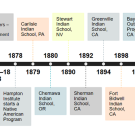
This lesson explores the history of forced assimilation of Native Americans, with a focus on Indian Boarding Schools as a key instrument of this policy. Students will gain an understanding of how these schools were used to suppress Native cultures and identities. This foundational lesson sets the stage for the next two lessons, which will explore Native American experiences in the US military and the themes of trauma and healing within Native communities.The teacher must understand that despite our tragic history, Native communities continue to find hope, look to the future, and lead the way in repairing our relationships to local ecosystems. The teacher must be prepared to actively engage in conversations about resistance and resilience throughout this lesson. Essential Questions: How did the US government abuse its power to acquire Indigenous lands during colonization? What were some of the policies of “forced assimilation” in the US? What were Indian Boarding schools and why were they created? What was it like to attend an Indian boarding school in the late 19th and early 20th centuries? Activities: Guided notes paired with the video resource. Think-Pair-Share discussions. Whole group discussion. Answering reading comprehension questions. KWL chart Writing a reflection paragraph in response to given prompts or a topic of their choosing. (Extension option: essay).

Fire Keeper © Amplify

Reading Resistance: Using TribalCrit and Indigenous Lens

Texts are powerful tools to transmit our histories, our hopes, and our imaginings for our collective futures. However, texts are also powerful tools used to erase and distort. Students must develop ideological awareness and come to understand how their personal understanding of history, ideology, and systems of power influences their ability to read critically--texts and our world. Survivance is not simply a counter-narrative or different interpretation of U.S. history. It articulates narratives of Indigenous resistance, resurgence, and renewal as acts of defiance against dominant-group interpretations of U.S. history” (Hopkins, pg. 81). In this project, students engage in reading “against the grain” or critical reading of dominant interpretations. Such reading is an important skill as students encounter a world where dominant interpretations are present and ubiquitous. However, students also engage in another type of reading- reading to unearth or uncover voices and erase histories.

Young dancer (Adam Enos) from Maidu dance group, by Dugan Aguilar.  Courtesy of Oakland Museum of California.

Righting Historical Wrongs: Laws Protecting Tribal Sovereignty and Cultural Heritage

This lesson serves as an introduction to two federal laws, the Indian Child Welfare Act (ICWA) and the Native American Graves Protection and Repatriation Act (NAGPRA), which address critical issues rooted in the historical injustices faced by Native American communities. Students will explore how these laws were created to protect tribal sovereignty and cultural identity to reverse past policies that disrupted Native families and disrespected Indigenous burial sites and sacred objects. The Indian Child Welfare Act was passed in response to the widespread removal of Native children from their homes and placement into non-Native families, which threatened the survival of tribal cultures and communities. NAGPRA acknowledges the deep spiritual and cultural significance of ancestral remains and culturally significant objects, ensuring they are returned to the appropriate tribes with respect and care. Through learning about ICWA and NAGPRA, students will gain insight into the ongoing journey toward justice, reconciliation, and respect for Native peoples’ rights to govern their own families and preserve their heritage. This lesson encourages students to understand how laws can be powerful tools to correct past harms and support tribal self-determination and cultural preservation.

Pruristac Village by Amy Hosa and Linda Yamane  © San Mateo County Historical Association (2019.43.1). Courtesy of the San Mateo County Historical Association.

Relationships with Energy and the Environment Throughout Time

The lesson is guided by the following questions: How have human relationships with the environment changed over time? How have humans changed their energy sources and use of energy over time? What relationships would be beneficial to humans and the environment in the future? The lesson is designed to help students consider the types of relationships that have existed throughout history between the peoples of the San Francisco Bay Area and their environment, understand the impacts of these relationships on the Earth, and envision a sustainable future that draws from the experiences and knowledge of the area’s first peoples. The lesson is divided into multiple parts. The first part focuses on the traditions and practices of the Ohlone that sustained themselves and their environment for many thousands of years before the invasion of Europeans. The lesson then segues into the history of the Ohlone and California Indians after contact with the Spanish and American settlers to set the stage for examining how these traditions and practices were disrupted and how new forms of energy use by settlers impacted the homelands of the Ohlone. Specifically, the lesson focuses on the development of the Golden Gate Bridge, and the city of San Francisco's economic ties with the surrounding region. The next part of the lesson provides students with an opportunity to use materials from the Understanding Global Change project at UC Berkeley to construct a model explaining the environmental impact of the relationships to energy sources that propelled the construction and use of the Golden Gate Bridge. Finally, students examine information from Project Drawdown, a science-based non-profit focused on drawing down greenhouse gas emissions. In small groups, students examine a drawdown solution of their choosing to present to the class. The lesson concludes with a focus on one particular drawdown solution - recycling - and the efforts of the Muwekma Ohlone people to champion this and other practices that promote right relationships with the Earth.

Photo and Basket created by Maggie Peters © Maggie Peters (Karuk/Yurok)

Resilience Through Northwestern California Basket Weaving

In this lesson, students will explore the rich tradition of basket weaving among California Tribes, gaining an appreciation for it as both a longstanding cultural practice and a living, contemporary art form. By examining the evolution of basketry across different historical periods, students will learn how California Tribes have preserved and adapted their traditions in the face of colonization and systemic oppression. The accompanying assignment will encourage students to critically analyze the impact of broader U.S. policies and historical events on Indigenous cultures—highlighting both the harm caused and the ways Indigenous communities have resisted and adapted.