sample

Native American Studies

ultural Connections with Grizzlies 2

Setting the Foundation for Grizzlies to Return

3-LS4-4, 4-ESS3-1, 5-ESS3-1

In this lesson, students will explore the importance of habitat restoration and conservation through the lens of grizzly bear recovery efforts. The lesson centers Indigenous knowledge, featuring perspectives from California Native communities, including members of the Gabrieleno/Tongva tribe, to highlight traditional ecological understandings and relationships with wildlife.

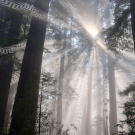
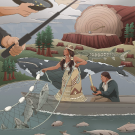
“Light Up the Darkness, Yurok Territory” © Louisa McCovey

Traditional Ecological Knowledge

This lesson introduces the concept of Traditional Ecological Knowledge. Students will be shown examples of Yurok TEK and will be introduced to gathering policies. Students will evaluate maps as they relate to reservation land versus public land use. This lesson is designed for middle school students and includes supports for multilingual learners at the Bridging proficiency level.

“Light Up the Darkness, Yurok Territory” © Louisa McCovey

Lesson 3: Yurok Country - Since Time Immemorial

In this lesson, students will review the importance of the Chah-pekw O’ Ket’-toh Stone Lagoon Visitor Center and Sue-Meg State Park. Students will be introduced to the California State Park Reexamining Our Past Initiative. Using different California State Park websites, students will analyze how the parks can be updated to reflect their Indigenous history.

“Light Up the Darkness, Yurok Territory” © Louisa McCovey

Yurok Country - Since Time Immemorial

This lesson addresses a brief history of Yurok and other Indigenous People in Humboldt County in relation to early exploration efforts and the change that was brought about from the fur trade and gold rush. This lesson also includes the brief history and importance of the Chah-pekw O’ Ket’-toh Stone Lagoon Visitor Center and Sue-Meg State Park. This lesson is designed for middle school students and includes supports for multilingual learners at the Bridging proficiency level.

“Light Up the Darkness, Yurok Territory” © Louisa McCovey

Yurok Land and the California State Parks

RI.6.7, WHST.6-8.7, HSS 8.8.2, WL.CM1.N: Interpretive Communication

This middle school unit offers teachers a meaningful and engaging opportunity to bring California’s Indigenous history and contemporary partnerships into the classroom through the lens of the Yurok Tribe’s work with California State Parks. Through four thoughtfully designed lessons, students will explore the ancestral and present-day relationship between the Yurok people and the lands now known as Sue-Meg State Park and the Chah-pekw O’ Ket’-toh Visitor Center in Humboldt County. The unit highlights themes of land stewardship, cultural preservation, Yurok language integration, and historical reexamination, and introduces students to the significance of Traditional Ecological Knowledge (TEK) in caring for the land.

Healing © Jackie Fawn

Trauma and Resilience: An Indigenous Lens

This three-part unit, Trauma and Resilience Through an Indigenous Lens, introduces students to the historical and contemporary impacts of trauma within Native American communities. Through a series of interactive lessons, students explore trauma as both a psychological and social phenomenon recognizing the significance of collective and intergenerational experiences. The unit begins by examining how historical events, such as colonization, forced relocation, and boarding schools, continue to shape the lived realities of Native communities today. Students engage with multimedia resources and participate in group discussions to reflect on how understanding this history is vital to addressing present-day challenges. In the second lesson, the focus shifts to intergenerational trauma, offering students insight into how trauma is passed down within families and how community support and cultural strength play essential roles in healing. This lesson emphasizes the importance of resilience-building within Indigenous communities and provides students the opportunity to begin creating personal, reflective responses through art or writing. The final lesson uplists celebration of Indigenous resilience, brilliance, and success. Students explore contemporary stories of Indigenous strength through video and discussion, and express their understanding through creative works such as poetry, storytelling, or visual art. A reflective sharing circle concludes the unit, fostering empathy, self-expression, and a deeper cultural awareness. Throughout the unit, students build critical thinking and empathy skills, while engaging with important themes of identity, history, and healing. Assessments include both discussion-based and a creative project that captures students’ personal understanding of trauma and resilience.


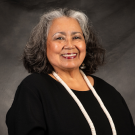
Mary Tarango © Sacramento State PC: Andrea Price

California Native Change Makers: Mary Tarango, Wilton Rancheria

This lesson focuses on Mary Tarango, a key figure in the Wilton Rancheria’s fight for the restoration of federal recognition. Designed for high school students, the activity introduces learners to the concept of a “Change Maker” by examining Tarango’s leadership, advocacy, and lasting impact on her tribal community. Students will explore the history of the Wilton Rancheria, including the devastating effects of the 1958 Rancheria Act, the tribe’s loss of federal recognition in 1964, and their eventual restoration in 2009—a movement in which Tarango played a significant role. The core activity asks students to work with a partner to research and create a collaborative Google Slides presentation that explains Mary Tarango’s contributions and the broader significance of tribal sovereignty. The presentation will include biographical information, historical context, and reflections on how Tarango’s leadership helped preserve her people’s identity and rights. The lesson meets Common Core writing standards by guiding students to analyze complex historical content and express their findings clearly and accurately in a multimedia format. It also integrates technology, requiring students to use the Internet and digital tools to create and publish their work. Students will begin with a brief introduction to Mary Tarango and the Wilton Rancheria's history through teacher-led discussion or multimedia resources. They will then engage in guided research, curate information with their partner, and design a visually engaging and informative presentation. A self-assessment rubric helps students reflect on their process, contribution, and final product. Completed presentations will be shared in class and submitted to the teacher to become part of a growing resource bank of California Native change makers, offering a long-term educational tool for future students to learn from.

The Klamath from 1822 to 2002 © Jackie Fawn

California Law Impact to Native Peoples

This unit offers students a powerful and honest exploration of California’s early statehood through the lens of Native history, ethics, and civic responsibility. Instead of glorifying westward expansion or the Gold Rush, students investigate the devastating impacts of colonization, state-sanctioned violence, and the legal infrastructure that enabled the genocide and enslavement of Native Californians. Through engaging activities like simulated journalist interviews, primary source analysis (including videos), law critiques, and reflective writing, students deepen their understanding of justice, historical truth, and ethical governance. They are encouraged to question traditional narratives and examine how white supremacy shaped California’s earliest laws and leadership. The culminating task, imagining a more ethical approach to colonization, empowers students to creatively apply their learning, while also identifying real ways to support Native communities today. This unit is not only rooted in critical thinking and empathy, but also fosters meaningful dialogue about history, power, and civic responsibility. It's a timely and impactful resource for any teacher committed to teaching truthfully and equitably.

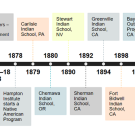
Timeline by Dr Keliiaa

National Policy: Indian Boarding Schools in California

HSS 11.1.4, HSS 11.3.2

This unit reviews a brief history of national Indian Boarding School policy and its effects locally in California with particular attention to Sherman Indian School in Riverside, CA. Students will engage in a Think – Pair – Share activity, will learn about the creation of the first off-reservation boarding school, and see a timeline of western and California-based schools. Students will hear first-hand accounts from federal officials and learn how boarding schools prioritized gendered labor. At the end of the lesson, students will define key terms and revisit essential questions. Lesson includes references to optional videos and additional materials and resources.

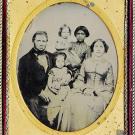
Whiskeytown National Recreation Area, WHIS 9066, Camden Family Portrait, circa 1857-1859

California Policy: Training and Working Native Peoples

HSS 11.1.4

This unit reviews a brief history of the 1850 Act for the Government and Protection of Indians—a law that allowed for the legal enslavement of California Indian children and adult “vagrants.” Students will watch a short 13-minute film (optional), review a brief timeline of California history (orienting them to the American period) and read and analyze primary source excerpts of the 1850 Act with a discussion on the 1860 amendment. Post lecture discussion will ask students to ponder if California was indeed a “free state”. Lesson includes an optional worksheet and recommends additional resources including articles, a podcast episode and further homework activities.