Grade 9

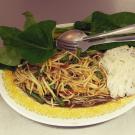
Green papaya salad “quab” is a staple dish in Cambodia, Laos, and Vietnam. Photo credit: Ger Thao, 2022.

Sharing Food Stories

HSS 4.4, HSS 4.4.4, RI.4.7, HSS 10.9, RI.9-10.7, W.9-10.9

Students will be able to trace and identify the origins of Hmong cuisine and community hubs in the United States through an exploration of diverse sources. They will connect these elements to the refugee experience and express their understanding by creating a personalized lunch box identity collage.

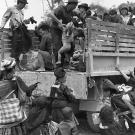
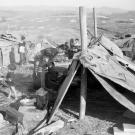
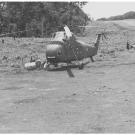
Hmong people climbing on to a truck in Ban Xon. Site: LS-272, Coordinates: TF 5994

War and Home - Part II

HSS 10.9.2, RI.9-10.7, W.9-10.4

This lesson is the continuation to Part I lesson that focuses on war and home. Part II focuses on how wars affect people’s relationships with homelands. Students will use the US’s Secret War in Laos as a case study to show how war disrupted Hmong people’s lives and homes and explore how displaced individuals and groups create home and belonging in the United States.

A displaced Hmong family in Luang Prabang. Site: L-54, Coordinates: TH 0302

War and Home - Part I

HSS 10.9.2, RI.9-10.2, W.9-10.4

War displaces people from their homes and transforms communities all over the world. This lesson is the introduction of two lessons that focus on war and home. Students will learn about the historical context of Hmong involvement and experience during the US’s Secret War in Laos to explore how war affects people’s concept of home.

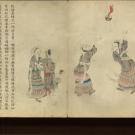
Chinese watercolor paintings of Miao people (Hmong) circa 1736 from Chinese Rare Book Collection.

The Origin of the Hmong in China

HSS 10.4, W.9-10.7, SL.9-10.1, RL.9-10.2

Students will learn the roots of the Hmong people in China and how displacement through persecution and war has led to the Hmong migrating south to Laos, Thailand and Vietnam. Through a platform of their choice, students will summarize and express the origin and identity of Hmong people and how it has been impacted by a history of being colonized, persecuted, and stateless.