Grade 7

Food Sovereignty Unit

Introduction to Food Sovereignty

HSS 6.2.1, HSS 8.12.3, HE Grade 1: Practicing Health-Enhancing Behaviors, HE Grade 1: Accessing Valid Health Information, RH.6-8.2, WHST.6-8.1

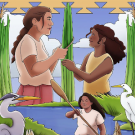
This lesson introduces students to the concept of food sovereignty and its importance to California Native communities. Students will explore how historical events disrupted traditional foodways and analyze the challenges Native communities face in regaining control over their food systems. Through reading, discussion, and a Venn diagram activity, students will develop an understanding of the cultural and ecological significance of food sovereignty and reflect on its role in improving health and preserving traditions. Students will understand the concept of food sovereignty and its importance to California Indian communities.

Artwork by Jackie Fawn © Save California Salmon

Healthy Rivers, Healthy People

This dynamic lesson will inspire students to think deeply about the crucial role rivers play in both the environment and Indigenous cultures. Focusing on the Klamath River and the Yurok and Karuk Tribes, this lesson offers a comprehensive exploration of river ecosystems, highlighting the importance of healthy watersheds for thriving wildlife and communities. Students will learn the science behind river systems and biodiversity but also gain an understanding of how Native peoples have lived in balance with these rivers since time immemorial, passing down traditional ecological knowledge for generations. This lesson blends interactive learning and real-world connections. Students will dive into the Klamath River’s story, exploring both the challenges it faces and the incredible restoration efforts underway, including the groundbreaking Klamath Dam removal project. They'll have the opportunity to analyze visuals, watch thought-provoking videos, and engage in lively discussions about how tribal communities are working to restore their rivers and protect their way of life. The lesson is designed to be both informative and empowering, giving students the tools to understand the importance of taking care of the rivers that sustain us all. With an interactive “Protect Your Waterway” activity, students will engage in a hands-on project that connects them to real-world water conservation efforts. By the end, they'll not only appreciate the value of a healthy river system but also be motivated to take action in preserving and protecting water resources. This lesson provides a powerful opportunity for students to explore the intersection of science, culture, and environmental stewardship, leaving them with a sense of responsibility and a deeper appreciation for the rivers that shape our world.

Screenshot from Coyote's Journey A Karuk Story of Theft and Return on the Klamath River  as told by Lisa Morehead-Hillman and Leaf Hillman © Lisa Morehead-Hillman and Leaf Hillman

Coyote As Trickster

This lesson offers an insightful exploration of Coyote, a central figure in Native California oral traditions, focusing on his role as a Trickster. Coyote’s presence in these stories serves as a cultural icon and as a means of teaching important life lessons. As a character who embodies both human-like flaws and superhuman qualities, Coyote provides a unique opportunity to examine the complex ways in which rules, behaviors, and consequences are communicated within Native Californian culture. The lesson invites students to understand Coyote is more than a mere buffoon, he is a creator and an instructor. Students will analyze his actions, reflecting on the larger purpose they serve in teaching resilience, flexibility, and the consequences of mistakes. Through engaging activities such as group discussions, note-taking, and videos, students will deepen their understanding of Coyote’s role in both traditional and contemporary Native California cultures. By the end of the lesson, students will appreciate Coyote’s complexity and his continued significance in both past and present narratives. This lesson explores Native California traditions but also challenges students to think critically about the relationship between storytelling, culture, and human behavior

Photo © Frank Tuttle

Feathers - A Primary Material

RH.6-8.4, RH.6-8.7, HSS 8.8.2, Connecting—Anchor Standard 11, 7.VA:RE8, 8.VA:RE7.1

This lesson invites students to explore the deep and enduring connection between humans and feathers, focusing on their cultural and artistic significance in Native California. Feathers have long held a central place in Native life, symbolizing both celebration and spiritual balance within a once-thriving ecosystem teeming with birds. Students will discover how feathers served not only as striking artistic materials but also as powerful expressions of identity, ceremony, and ancestral tradition. Through thoughtful observation, note-taking, and discussion, learners will examine the observable qualities of feathers, understand how and why specific feathers were chosen, and explore how feathers were combined with other natural materials to create meaningful cultural objects. With beautiful images, a traditional story, and interactive reflection, this lesson offers a window into the sophisticated ways Native California tribes honored and utilized this cherished natural resource. Teachers will find this opportunity to connect students with Indigenous knowledge, environmental awareness, and the power of cultural expression.

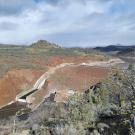
© Brook Thompson

Dam Removal

MS-LS2-1, MS-ESS3-3, CTE.EA.D.13.4, CTE.EEU.A.9.4, 7.VA:CN11, 7.VA:CR2.3, 7.VA:RE7.2, PROF.VA:RE7.1

In this lesson, students will explore the purpose, function, and impact of dams, with a special focus on how they affect river ecosystems, salmon populations, and Native American communities in California. This lesson supports California State Standards MS-LS2-1: Interdependent Relationships in Ecosystems by examining how changes in water flow, temperature, and habitat caused by dams affect the balance of life in aquatic environments. It also connects to MS-ESS3-3: Human Impacts on Earth Systems by highlighting how human structures like dams can significantly alter natural systems—and how people can work to restore them. As well as looking at cause and effects through the lens of dams and river health. Students will begin by sharing prior knowledge and building key vocabulary related to ecosystems and dam removal. They will watch a short video featuring Indigenous leaders advocating for the health of the Klamath River and learn about the environmental and cultural significance of dam removal. The lesson emphasizes how dams disrupt the natural relationships between species—such as salmon and their spawning grounds—by blocking migration, increasing parasites, and reducing oxygen levels. Through the case study of the Klamath River, students will gain a timeline of environmental activism, tribal leadership, and collaboration among governments, nonprofits, and local communities that led to the successful removal of multiple dams. They will also analyze how art and protest have played powerful roles in raising awareness and calling for justice. By the end of the lesson, students will better understand the deep connections between human actions and environmental health, and how restoring ecosystems can involve science, policy, culture, and community efforts.

TEK Estuaries Save California Salmon 2022 © Jackie Fawn

California Tule

W.6.8, SL.8.1, HSS 8.8, HSS 8.8.2, HSS 8.8.5, MS-LS2-2, MS-LS2-4, MS-LS2-5

This lesson explores the significance of the tule plant in both cultural and contemporary contexts. Tule is an important plant in California, known by various names depending on the land and people associated with it. In the Central Valley, the most common species are Schoenoplectus acutus (Common Tule) and Schoenoplectus californicus (California Bulrush). The name "tule" is derived from the Spanish settlers who adopted the Nahuatl term "tōllin," used by Indigenous people in Mexico City, to refer to the plant they encountered in California. Tule grows in wetland environments such as ponds, lakes, marshes, and along shorelines of rivers, estuaries, and coastal areas. Historically, tule thrived across California, particularly in freshwater habitats. However, due to colonization, much of its habitat has been reduced by water diversions, drought, and development. As a result, tule is now primarily found in protected areas like state and federal parks, although California Indians face restrictions on gathering it in these locations. Before European settlement, tule was central to the culture and economy of California Indian tribes. It was used in a variety of ways, including for ceremonial purposes, transportation, hunting, and food preparation. Tule’s versatility allowed it to be woven into baskets, mats, clothing, and shelters. Many tribes, such as the Kumeyaay, crafted tule boats for hunting whales, while others used tule decoys for waterfowl hunting or wore tule skirts during ceremonies. The traditional harvesting and use of tule were guided by Indigenous practices, and multiple tribes often shared wetlands, managing them through tribal laws. Despite the challenges faced by tule due to colonization, it continues to be an essential plant in the cultural practices of California Indians, with its legacy preserved through modern generations.

Artwork by Jackie Fawn © Save California Salmon

Activism: Land Back

SL.6.1, SL.7.1, SL.8.1, W.6.2, W.7.2, W.8.2, W.8.4, RH.6-8.4, RH.6-8.7, HSS 8.8, HSS 8.8.2, HSS 8.8.5

The relationship between Indigenous peoples and land in the U.S. is deeply rooted in cultural, ceremonial, and historical connections, which have often been disrupted by colonization, forced assimilation, and land dispossession. Concepts such as Tribal sovereignty, land stewardship, and land back movements emphasize Indigenous peoples’ inherent right to govern themselves, care for ancestral lands, and reclaim access to natural resources. These efforts are grounded in values of cultural revitalization, environmental conservation, and self-determination, often in contrast to policies like land acquisition through unratified treaties, residential schools, and the use of public lands for military, resource extraction, or restricted conservation purposes.

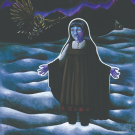
“Going Home” by  Judith Lowry photo © JOLYNN PARENTEAU

Imagining the Native American Native California Artists Judith Lowry

In this lesson, students will learn about Judith Lowry, a Native American artist whose work powerfully reflects her cultural heritage and important moments in Native history. We will begin by reading a short biography to understand her life story, including how her mixed background and experiences have influenced her art. Then, students will explore several of Lowry’s vibrant paintings, using them as a window into Native perspectives and stories that are often overlooked or misunderstood. Through guided discussion and observation, students will discover how Lowry uses her art to challenge stereotypes, celebrate Native identity, and bring attention to the challenges Native communities face today. This lesson aims to help students appreciate art as a form of storytelling and social activism, while inspiring them with the creative strength and resilience of Judith Lowry and other Native artists.

“American Dream Machine” (C) 2016 Harry Fonseca Collection, Autry Museum; 2016.10.1

Imagining the Native American Native California Artists Harry Fonseca (Nisenan Maidu)

HSS 5.8, HSS 5.8.6, HSS 8.8, HSS 8.8.2, Connecting—Anchor Standard 11, 1.VA:RE7.1, 5.VA:RE7.1, 6.VA:RE7.1, 8.VA:RE7.1, PROF.VA:RE7.1

In this lesson, students will explore the life and artwork of Harry Fonseca, a celebrated Native California artist of Nisenan Maidu, Hawaiian, and Portuguese ancestry and a citizen of the Shingle Springs Band of Miwok Indians. Fonseca used his art to express identity, honor Native traditions, and respond to historical events like the California Gold Rush. Through vibrant paintings, symbolic imagery, and recurring figures like the trickster Coyote, Fonseca’s work invites students to think deeply about storytelling, cultural resilience, and how art can be both personal and political.

Nae-rew Martin, Maggie Peters, and Pakuni Martin © Maggie Peters

Understanding the Complexities of Native Identity

RI.6.1, RI.7.6, RL.8.4, SL.6.1, W.7.9, ELA Grade 6 : Craft and Structure, HSS 8.1

This lesson invites middle school students, who developmentally are focused on self discovery and identity, to reflect on stereotypes and simplistic ideas about who Native people are. Using powerful video content from Redbud Resource Group, the lesson helps students explore how Native identity is shaped by history, culture, family, and government policy. Students will examine how colonization, forced assimilation, and the invention of systems like blood quantum have made it harder for some Native people to access their traditions or even be recognized by their own communities. Guided by thoughtfully designed slides, students hear from tribal enrolled and not enrolled Native people testify to their personal identities, engage in youth poetry analysis, and reflect on personal identity mapping activity.